Introduction
Last updated: March 11, 2026
Magnesium dosage is one of the most common questions people ask before starting magnesium supplements. Magnesium is involved in more than 300 biochemical reactions in the human body, including muscle contraction, nerve signaling, energy production, and blood sugar regulation.
Despite its importance, many people do not get enough magnesium from their daily diet. Modern eating habits, stress, caffeine, and processed foods may contribute to low magnesium levels.
However, taking the right dosage is essential. Too little magnesium may not provide noticeable benefits, while excessive supplementation can lead to digestive issues and other side effects.
In this guide, we explain the recommended magnesium dosage, safe intake limits, and how to choose the right amount depending on your health goals such as sleep, muscle recovery, or overall wellness.
If you want a full overview of magnesium, including its health benefits, supplement types, and deficiency symptoms, read our complete Magnesium Guide.
Recommended Daily Magnesium Intake
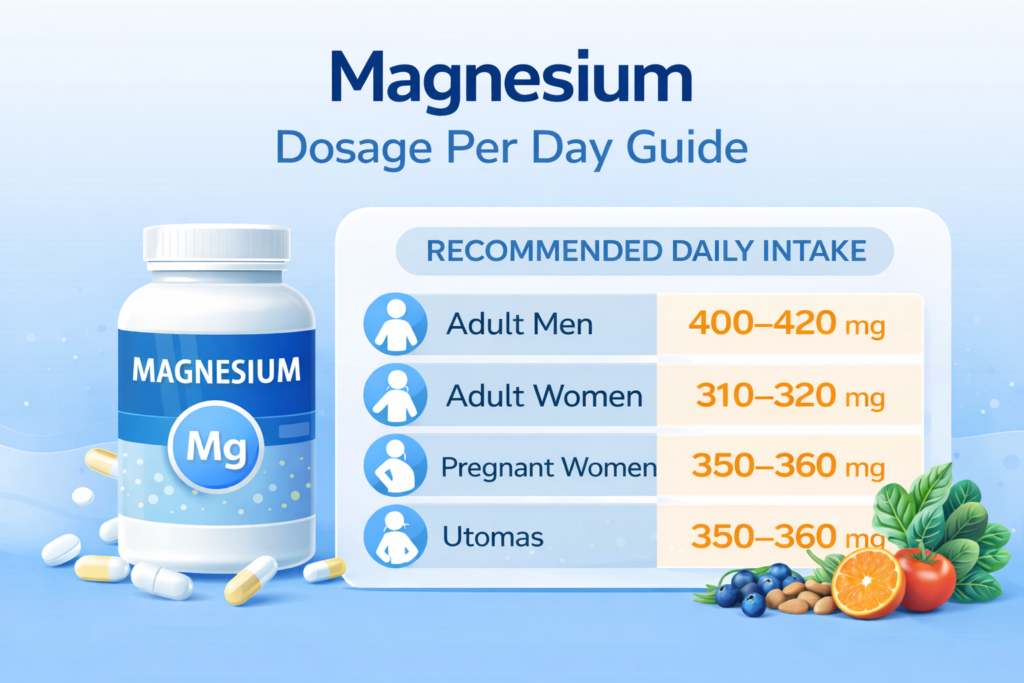
Health organizations such as the National Institutes of Health (NIH) provide recommended daily intake values for magnesium.
Typical daily magnesium needs are:
| Group | Recommended Intake |
|---|---|
| Men (19–30 years) | 400 mg |
| Men (31+ years) | 420 mg |
| Women (19–30 years) | 310 mg |
| Women (31+ years) | 320 mg |
These numbers include magnesium from both food and supplements.
Because many diets contain less magnesium than recommended, supplements are commonly used to reach optimal intake levels.
Magnesium Dosage for Different Health Goals
Different magnesium forms and dosages may support different health needs.
Low magnesium levels can also lead to fatigue, muscle cramps, and other symptoms. If you want to learn how to recognize magnesium deficiency early, read our guide on http://magnesium deficiency symptoms.
Magnesium Dosage for Sleep
Magnesium is widely used to support sleep quality and relaxation.
Many experts recommend:
200–400 mg per day
Magnesium glycinate is often considered one of the best forms for sleep because it contains glycine, an amino acid that may help calm the nervous system.
Taking magnesium 1–2 hours before bedtime may improve relaxation and help support healthy sleep patterns.
If you want to understand which magnesium form works best for sleep and relaxation, read our detailed guide on the best magnesium supplements.
Magnesium Dosage for Muscle Cramps
Magnesium plays an important role in muscle contraction and relaxation. Low magnesium levels may contribute to muscle cramps, spasms, and fatigue.
Typical supplementation for muscle support ranges between:
300–400 mg per day
Forms such as magnesium citrate and magnesium malate are commonly used for muscle recovery and physical performance.
Athletes and physically active individuals may benefit from magnesium supplementation if their dietary intake is insufficient.
Magnesium Dosage for Blood Sugar Support
Recent research has suggested that magnesium may help support healthy blood sugar regulation and insulin sensitivity.
Studies have shown that magnesium supplementation may improve markers such as fasting glucose levels and insulin resistance in individuals with low magnesium intake.
Typical supplemental doses used in research range between:
300–400 mg per day of elemental magnesium
However, magnesium should always be considered part of a broader lifestyle approach that includes a balanced diet and regular physical activity.
Can You Take Too Much Magnesium?
Magnesium obtained from food is generally safe because the body regulates absorption through the kidneys.
However, excessive magnesium intake from supplements may cause side effects.
The upper limit for magnesium from supplements is generally considered:
350 mg per day
Higher doses may cause symptoms such as:
- diarrhea
- nausea
- abdominal discomfort
Very high doses may lead to more serious complications, especially in people with kidney disease.
If you are unsure about the appropriate magnesium dosage, it is best to consult a healthcare professional.
Best Time to Take Magnesium
The timing of magnesium supplementation may depend on your health goals.
Common recommendations include:
Morning
Magnesium malate or citrate may help support energy production and muscle function.
Evening
Magnesium glycinate may help promote relaxation and improve sleep quality.
Some people prefer to split their magnesium dosage into two smaller servings during the day to improve absorption and reduce digestive discomfort.
Practical Tips for Taking Magnesium
To get the most benefit from magnesium supplements:
• Check the label for elemental magnesium
• Start with a moderate dose (200–300 mg)
• Take magnesium with food to reduce stomach upset
• Avoid taking very high doses without medical supervision
Consistency is important. Many people notice benefits only after several weeks of regular supplementation.
Frequently Asked Questions
How much magnesium should I take daily?
Most adults need 310–420 mg per day from food and supplements combined, depending on age and gender.
Is 400 mg of magnesium safe?
For many adults, 400 mg per day from total intake is considered normal. However, supplementation above 350 mg per day should generally be discussed with a healthcare professional.
Can magnesium help with sleep?
Yes. Magnesium may help regulate neurotransmitters involved in relaxation and sleep, particularly when taken in the evening.
How long does magnesium take to work?
Some people notice improvements within a few days, while others may require 2–4 weeks of consistent use to see benefits.
Conclusion
Magnesium plays an essential role in overall health, supporting muscle function, sleep, energy production, and metabolic processes.
Most adults benefit from consuming 300–420 mg of magnesium per day, depending on their age, gender, and diet.
Choosing the right magnesium dosage and supplement form can help maximize benefits while minimizing potential side effects.
If you are considering magnesium supplementation, choose a high-quality product and follow recommended dosage guidelines to support long-term health and well-being.
Disclaimer: This article is for informational purposes only and does not replace professional medical advice.
Sources
- National Institutes of Health – Magnesium Fact Sheet
- https://ods.od.nih.gov/factsheets/Magnesium-HealthProfessional/
- PubMed – Magnesium research database
- https://pubmed.ncbi.nlm.nih.gov/
- Office of Dietary Supplements (NIH)
- https://ods.od.nih.gov/
- European Food Safety Authority – Magnesium
- https://www.efsa.europa.eu/