Introduction
Last updated: March 11, 2026
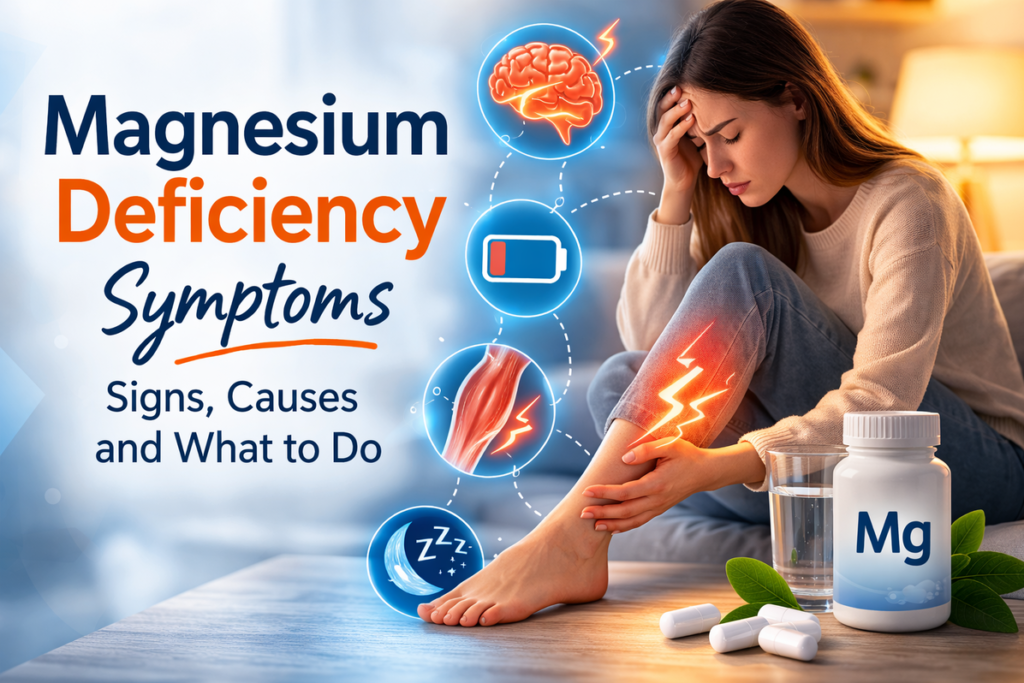
Magnesium deficiency symptoms are more common than many people realize. Signs may include fatigue, muscle cramps, headaches, and sleep disturbances caused by low magnesium levels. Many people experience symptoms of magnesium deficiency, such as muscle cramps, chronic fatigue, headaches, and insomnia, without realizing that low magnesium levels may be the cause.
Magnesium plays a critical role in over 300 biochemical reactions in the body, including nerve impulse transmission, muscle relaxation, and energy production. Recognizing the early signs of magnesium deficiency can help you address the problem sooner and restore proper mineral balance to improve your health and quality of life.
If you want a complete overview of magnesium, including benefits, dosage, and supplement types, read our full Magnesium Guide.
Common Magnesium Deficiency Symptoms
- Muscle cramps and spasms
- Chronic fatigue and low energy
- Headaches and migraines
- Sleep problems and insomnia
- Anxiety and irritability
- Muscle weakness
- Numbness or tingling
- Irregular heartbeat in severe cases
What Causes Magnesium Deficiency
- Poor diet low in magnesium-rich foods
- Chronic stress
- Excessive alcohol consumption
- Digestive disorders
- Certain medications
- High caffeine intake
- Type 2 diabetes
How to Fix Magnesium Deficiency
Magnesium deficiency can often be corrected through a combination of dietary changes, lifestyle improvements, and in some cases magnesium supplementation. The first step is identifying whether your symptoms may be related to low magnesium intake or an underlying health condition that affects mineral absorption. Increasing magnesium-rich foods in your diet and reducing factors that deplete magnesium can significantly improve your body’s mineral balance. In more severe cases, magnesium supplements or laboratory testing may help confirm and address the deficiency.
If you suspect magnesium deficiency, choosing the right supplement form is important. You can read our detailed guide on how to choose the best magnesium supplements for sleep, stress and energy support.
Foods High in Magnesium
- Spinach and leafy green vegetables
- Pumpkin seeds and sunflower seeds
- Almonds and cashews
- Avocados
- Dark chocolate
- Whole grains such as brown rice and oats
- Legumes including beans and lentils
Magnesium Supplements
Magnesium supplements can help restore normal magnesium levels when dietary intake is insufficient. Common forms include magnesium citrate, magnesium glycinate, magnesium oxide, and magnesium malate. Magnesium glycinate is often recommended for better absorption and fewer digestive side effects. However, it is always advisable to consult a healthcare professional before starting supplementation, especially if you take medications or have underlying medical conditions.
Tests for Magnesium Deficiency
If you suspect magnesium deficiency, laboratory testing can help confirm low magnesium levels. Blood tests are commonly used, although they may not always reflect total magnesium stored in the body. Some healthcare providers may recommend additional tests depending on symptoms and medical history. Identifying deficiency through proper testing can help determine the most effective treatment plan.
Frequently Asked Questions About Magnesium Deficiency
What are the first signs of magnesium deficiency?
The earliest signs of magnesium deficiency often include muscle cramps, fatigue, headaches, and difficulty sleeping. Some people also experience irritability, anxiety, or muscle twitching. Because magnesium plays a key role in nerve and muscle function, even a mild deficiency can affect how the body feels and performs. If these symptoms appear regularly, it may be worth evaluating your magnesium intake.
How long does it take to fix magnesium deficiency?
The time required to correct magnesium deficiency depends on how severe the deficiency is and how it is treated. Mild deficiencies can sometimes improve within a few weeks after increasing magnesium intake through diet or supplements. In more significant cases, restoring optimal magnesium levels may take several months. Consistency with diet, lifestyle changes, and proper supplementation plays an important role in recovery.
Which foods are highest in magnesium?
Some of the best natural sources of magnesium include leafy green vegetables such as spinach, nuts like almonds and cashews, seeds, legumes, whole grains, and dark chocolate. Avocados and bananas also contain moderate amounts of magnesium. A balanced diet that includes these foods regularly can help maintain healthy magnesium levels. Whole foods are usually the most effective way to prevent deficiency.
What causes low magnesium levels in the body?
Low magnesium levels can result from poor dietary intake, chronic stress, excessive alcohol consumption, digestive disorders, and certain medications. Conditions such as type 2 diabetes may also affect how the body uses magnesium. In some cases, high caffeine consumption or long-term gastrointestinal problems can interfere with magnesium absorption. Identifying the underlying cause is important for effective treatment.
Should I take magnesium supplements every day?
Magnesium supplements may be helpful for people who do not get enough magnesium from their diet. However, daily supplementation should ideally be guided by a healthcare professional, especially for individuals with medical conditions or those taking medications. The appropriate dose depends on age, diet, and overall health. For many people, improving diet and lifestyle may already provide sufficient magnesium intake.
Conclusion
Magnesium deficiency is more common than many people realize and can affect energy levels, muscle health, sleep, and overall well-being. Recognizing magnesium deficiency symptoms early—such as muscle cramps, fatigue, and headaches—can help you take action before the problem becomes more serious. Improving your diet with magnesium-rich foods, reducing stress, and addressing possible underlying causes are often effective first steps. If symptoms persist, consulting a healthcare professional and considering laboratory testing may help determine the most appropriate solution.
This article is for informational purposes only and does not replace professional medical advice. If you suspect magnesium deficiency or experience persistent symptoms, consult a qualified healthcare professional for proper diagnosis and treatment.
Sources
- National Institutes of Health – Magnesium Fact Sheet
- https://ods.od.nih.gov/factsheets/Magnesium-HealthProfessional/
- PubMed – Magnesium research database
- https://pubmed.ncbi.nlm.nih.gov/
- Office of Dietary Supplements (NIH)
- https://ods.od.nih.gov/
- European Food Safety Authority – Magnesium
- https://www.efsa.europa.eu/